Dave and Busters Bellevue Redefines Entertainment in Regenerative Soaking Culture
Dave and Busters Bellevue Redefines Entertainment in Regenerative Soaking Culture
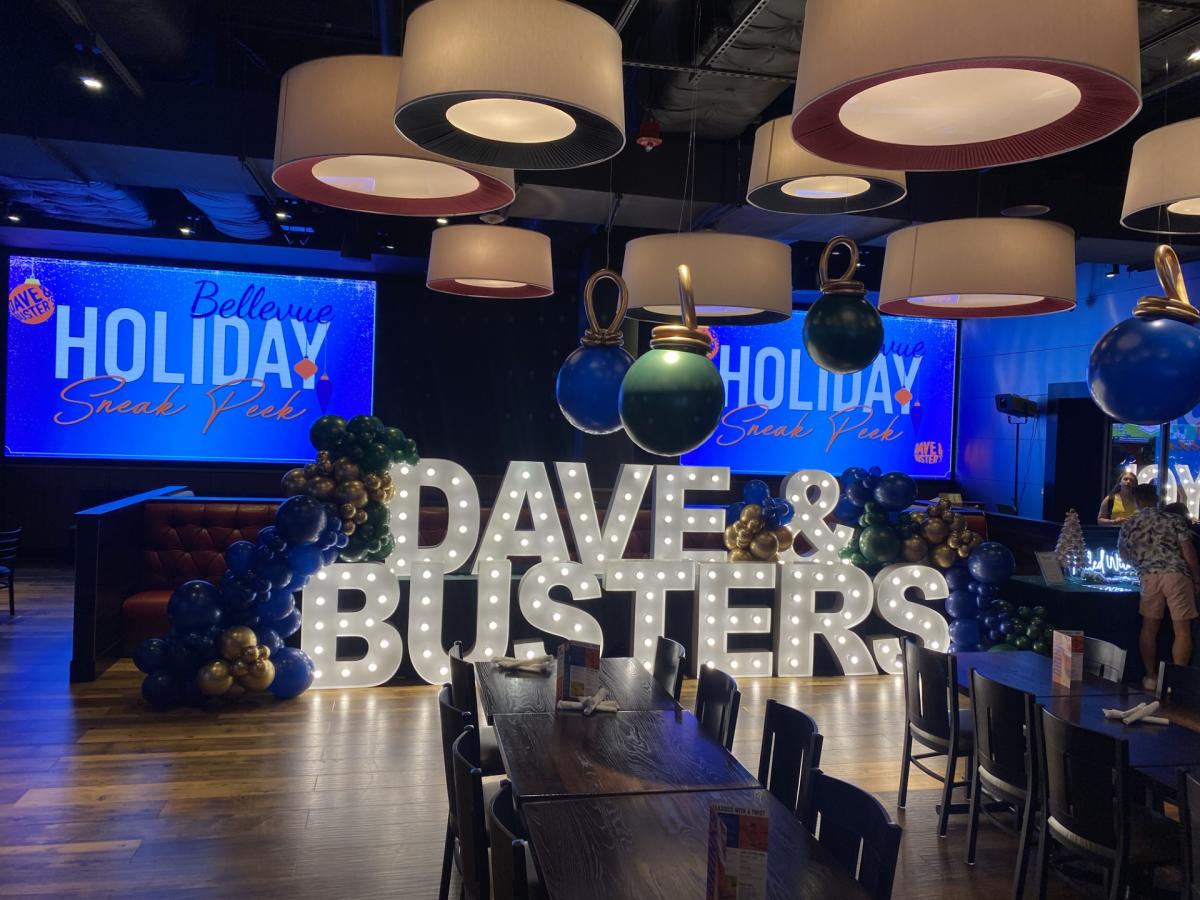
Located in the heart of Bellevue, Washington, Dave and Busters Bellevue stands as a pioneering destination where immersive gaming, relaxation, and themed immersion converge—specifically in the burgeoning niche of forced hot spring-style soaking experiences. Unlike traditional arcades or lounges, this venue reimagines wellness and recreation through a lens of indulgence, offering visitors not just screens and snacks, but curated moments of deep-soak restoration fused with interactive entertainment. At its core, Dave and Busters Bellevue blends the ritual of Japanese onsen (hot spring) culture with the adrenaline of arcade gaming, creating a multi-sensory haven designed for both escape and rejuvenation.
The venue’s signature feature—its specially engineered, luxury soaking pits—draws directly from traditional onsen principles, yet integrates modern design, climate control, and health-focused amenities. “We’re not just serving drinks and games,” explains general manager Rachel Chen in a 2023 interview. “We’re crafting a full-body experience where stress melts just as easily as in a natural hot spring.”
Guests enter a space that feels simultaneously spa-like and high-energy.
Soaking stations feature temperature-controlled water averaging 105–112°F—optimal for enhanced circulation and muscle relaxation—blended with mineral infusions like magnesium sulfate and potassium chloride drawn from natural brines. These bespoke formulations echo the therapeutic benefits celebrated in onsen communities worldwide, where hot mineral waters are revered for their skin-soothing and joint-relaxing properties. Inside the gaming zone, guests select from oversized state-of-the-art machines, virtual reality setups, and classic arcade classics, all synchronized with ambient lighting and soundscapes that deepen immersion.
- Soaking pits designed for comfort and privacy with integrated massage jets
- Mineral-enriched water recirculation systems ensuring purity and safety
- Seamless integration of hot spring concept with tech-forward entertainment
- Health-focused amenities including pre- and post-soak hydration stations
The venue’s layout strategically directs guests through a journey: from high-energy gaming bouts to slow, meditative soak periods,



Related Post

Wooo Meaning: Decoding the Depth Behind One of the Most Resonant Expressions in Modern Culture

5 Movierulz Alternatives You Need to Know About — Reliable Streaming Alternatives in a Post-Piracy Landscape
All About Justin Whalin: From Young Prodigy to Industry Trailblazer
Paul Reubens: Peewee Herman’s Velocity Icon Dies at 70, Ends a Pub Crawl With Legacy That Endures</h2> In a twilight marked by both cinematic memory and untold facets of his life, Paul Reubens, the man behind the slobbery, eccentric, and outspoken Peewee Herman, passed away at 70. Known for redefining childhood rebellion on screen, Reubens’ death closes a chapter in American pop culture, one that blended vulgar humor with heartfelt authenticity. Once a household name from the 1980 hit film, his legacy extends far beyond the red-and-white striped shorts, now inseparable from the character who captured a generation’s cantankerous charm. <p>Born in Baltimore, Maryland, in 1952, Reubens emerged not just as an actor but as a performer unafraid of pushing boundaries. His embodiment of Peewee Herman—a defiant, snarly-haired antihero—blended physical comedy with sharp, streetwise dialogue that struck a chord with audiences hungry for authenticity. The Peewee Herman series, though commercially successful, often overshadowed Reubens’ broader artistic range. Few realize he appeared in Broadway plays, voice acting, and even avant-garde theater, proving his talents extended well beyond children’s television. As *Chicago Sun-Times* noted in its obituary, “Reubens was more than a child star—he was a performer who leveraged innocence into subversion.” <h3>A Career Built on Risk and Voice</h3> Reubens’ early career was defined by bold choices. Before Peewee, he starred in off-Broadway productions such as *The Spook Who Sat by the Door*, where his dramatic range simmered beneath the surface, hinting at complexity beneath the goof. With Peewee Herman, launched in 1985, he abandoned subtlety entirely: “Make them laugh, make them weird, make them remember,” Reubens once said, capturing the essence of his performative philosophy. The character’s signature voice—raspy, gravelly, dripping with sass—became iconic, a vocal signature recognized by millions. <p>The 1980s explosion of Peewee Herman’s films turned Reubens into a curious cultural paradox: a serious actor whose most beloved role was pure absurdity. Yet, in interviews, he insisted his performance was deliberate—a nuanced portrait of teenage defiance. “I didn’t play a cartoon character,” he explained. “I played a version of me—rough around the edges, protective of friends, screwed up, but loyal.” This authenticity resonated in an era increasingly skeptical of artificial corporate branding, making Peewee’s appeal timeless. <h2>Personal Life and Shadows Beyond the Spotlight</h2> Beyond the screen, Reubens navigated a life marked by both acclaim and private complexity. Always a confessed fan of rock ’n’ roll and jazz, his persona extended into music and visual art, though these pursuits rarely entered mainstream discourse. He resided in New York’s Greenwich Village, a neighborhood steeped in artistic tradition, maintaining long-standing friendships with peers across disciplines. <p>Despite the glare of fame, Reubens valued privacy fiercely. The Velvet Crimeoclub — a performance space and cultural hub — served as a sanctuary where he entertained trusted artists and writers. In rare public appearances, he spoke candidly of battling creative stagnation and the weight of typecasting, once remarking, “People remember the mask, not the man.” Such reflections humanized the performer, revealing layers beneath the red-and-white attire. <h3>Leadership, Mentorship, and the Legacy of Peewee</h3> Reubens’ influence reached beyond performance into mentorship. He supported emerging artists through workshops and collaborative projects, particularly those exploring boundary-pushing storytelling. The Peewee Herman Archive, now studied in theater programs, illustrates how he transformed personal quirks into universal themes of identity and belonging. <p>The character became a cultural touchstone, symbolizing youthful rebellion and resilience, but Reubens resisted reducing himself to a symbol. “Herman isn’t me,” he clarified in *Sun-Times* features, “he’s a story I inherited—and a story I continue telling, oddly enough, decades later.” This duality—public icon, private craftsman—defined his enduring presence. <h2>Enduring Impact: Why Peewee Herman Still Slaps the Nerve</h2> Even after the curtain fell, Peewee Herman retains pulse in internet memes, fashion revivals, and genre homages. His snarl, “You ya ridiculous—bury me!” echoes in viral clips and social commentary. Yet Reubens’ true legacy lies not in viral fame but in the authenticity he brought to every role. <p>Critics and fans alike praised his ability to fuse humor with emotional truth. As theater historian Dr. Elena Park observed, “Reubens taught audiences that vulnerability and absurdity coexist. He made slobberness feel sincere.” Whether in a Intervals show, a Broadway curtain call, or a private art session, Paul Reubens remained fundamentally creative—too often typecast, never fully understood. <h1>Paul Reubens, Peewee Herman’s Velocity Icon Dies at 70 — Ends a Velocity Legacy That Never Grew Old


